
7 Tips to Buy Minimally Invasive Robotic Surgery Systems
Minimally invasive robotic surgery is moving from premium hospital technology toward a broader clinical investment. Grand View Research valued the global surgical robots market at approximately USD 7.4 billion in 2023 and projected strong growth through 2030. These figures are useful, but market forecasts are not purchasing instructions. They often combine different procedures, platforms, and healthcare systems.
The real decision begins beside the operating table. How steady is the instrument during suturing? Can the team see tissue clearly under challenging lighting? How quickly can staff change instruments, troubleshoot alarms, and complete system cleaning? Dr. Catherine Mohr, a widely recognized robotic surgery expert, has stated, “The robot is a tool, not a replacement for the surgeon.” That distinction matters. A sophisticated console cannot repair weak training, poor workflow design, or limited clinical support.
This guide presents seven practical tips for buying minimally invasive robotic surgery systems. It examines clinical fit, instrument range, training, service contracts, data security, room requirements, and total ownership cost. Intuitive Surgical’s annual reports also show why recurring instruments, service, and procedure volume deserve careful review. The purchase price is only one line.
Look beyond the brochure.
Hospitals should compare peer-reviewed evidence, independent demonstrations, and feedback from surgeons who use each platform routinely. A lower-cost system may create higher expenses through downtime or restricted instruments. A premium system may still be unsuitable for a smaller hospital. No scorecard is perfect. That is the uncomfortable part. Careful buyers should document assumptions, test realistic cases, and revisit the decision after implementation.
Define Surgical Needs and Suitable Robotic Applications
Define Surgical Needs and Suitable Robotic Applications
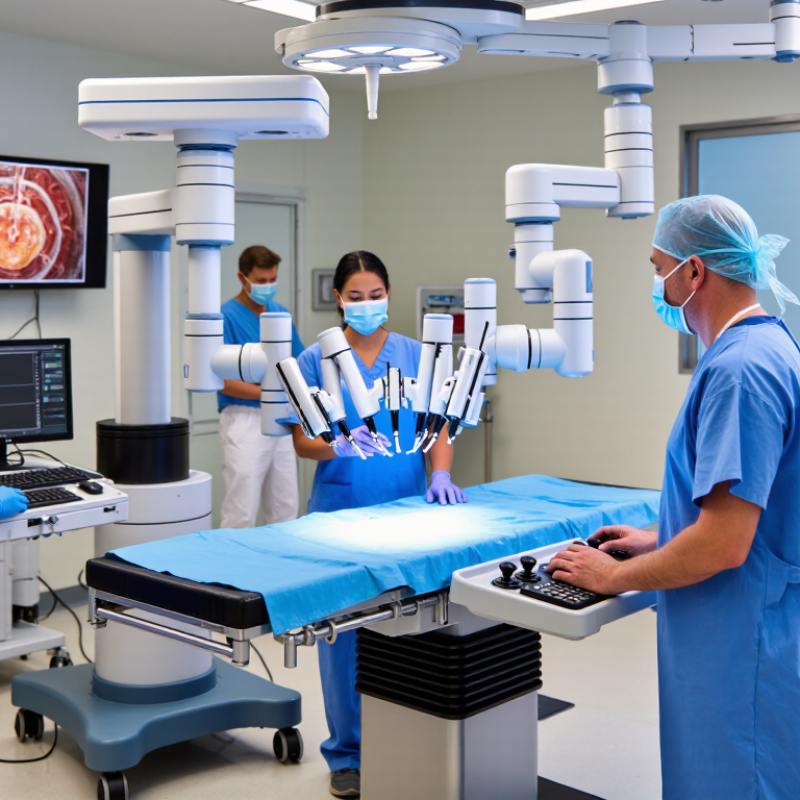
Buying a robotic surgery system should begin with clinical needs, not impressive technical features. Review your hospital’s common procedures, patient profiles, and current surgical limitations. A system designed for narrow pelvic access may offer little value in a facility focused on open abdominal care. Speak with surgeons, anesthesiologists, nurses, and sterile processing staff before writing requirements. Their daily experience often reveals overlooked issues, such as limited operating-room space or lengthy instrument setup.
Examine whether robotic assistance can improve access, visualization, precision, or surgeon ergonomics for selected procedures. Review peer-reviewed evidence, procedure volume, complication data, and training requirements. A busy program may justify advanced capabilities, while a low-volume department may struggle to maintain proficiency. Assess compatible instruments, imaging needs, table movement, and emergency conversion procedures. The system must support safe teamwork, not isolate the primary surgeon behind a console.
A practical evaluation uses real surgical scenarios. Map the room with anesthesia equipment, staff positions, and patient transport routes. Then test docking near the operating table. Small conflicts matter. In one assessment, a planned monitor position blocked staff movement, although the equipment appeared suitable on paper. This kind of mistake is easy to repeat. Reconsider the purchase when expected applications depend on rare cases, uncertain reimbursement, or unproven workflow benefits. Keep patient safety, measurable outcomes, and local expertise at the center of every decision.
7 Tips to Buy Minimally Invasive Robotic Surgery Systems - Define Surgical Needs and Suitable Robotic Applications
| Tip | Decision Dimension | Typical Surgical Need | Suitable Robotic Application | Recommended Evaluation Criteria | Indicative Target or Benchmark | Priority |
|---|---|---|---|---|---|---|
|
1 Define the clinical scope |
Procedure volume and specialty fit | Frequent minimally invasive procedures with consistent case volume, difficult angles, deep anatomy, or limited working space. | Procedure families such as laparoscopic pelvic surgery, thoracic surgery, colorectal surgery, urologic surgery, and selected gynecologic procedures. | Annual eligible case volume, surgeon interest, patient selection criteria, operating-room availability, and expected utilization across specialties. | At least 2–3 repeatable procedure categories with a realistic first-year adoption plan. | High |
|
2 Match capabilities to anatomy |
Access, visualization, and instrument dexterity | Need for stable three-dimensional visualization, tremor reduction, articulated instruments, precise dissection, or suturing in confined spaces. | Deep pelvic dissection, mediastinal access, intracorporeal suturing, lymph-node dissection, and complex reconstructive steps. | Camera stability, image resolution, depth perception, instrument articulation, wristed motion, motion scaling, and range of motion. | System should support the required instrument angles and reach without forcing excessive tissue traction or port repositioning. | High |
|
3 Verify minimally invasive access |
Port placement and operating-room workflow | Need to reduce external instrument clashing, improve access around the patient, and maintain compatibility with established laparoscopic pathways. | Multiport procedures, selected reduced-port approaches, and operations requiring frequent instrument exchanges or changes in viewing direction. | Number and size of ports, port spacing, patient-side clearance, docking time, undocking requirements, emergency access, and compatibility with standard operating tables. | Port layout should be reproducible for the intended procedures, with a documented emergency conversion and rapid-access plan. | High |
|
4 Assess clinical evidence |
Safety, effectiveness, and measurable outcomes | Need evidence that the system supports safe adoption rather than relying only on technical specifications or marketing claims. | Procedures where blood loss, conversion to open surgery, complications, length of stay, readmission, and recovery time can be tracked consistently. | Peer-reviewed studies, regulatory clearance for intended use, post-market surveillance, complication data, learning-curve information, and comparable procedure outcomes. | Use a local outcomes dashboard covering 30-day complications, conversion rate, blood loss, length of stay, and readmissions. | High |
|
5 Plan training and adoption |
Surgeon, assistant, and operating-room team readiness | Need structured education, supervised cases, simulation, and clear role definitions for the surgeon, bedside assistant, anesthesiology team, and nurses. | Programs with several surgeons sharing one platform and standardized procedures that can be introduced through a proctoring pathway. | Simulator availability, credentialing requirements, dry-lab and wet-lab access, proctoring, maintenance training, team drills, and competency assessment. | Adoption plan should include simulation before live cases, supervised initial cases, and defined privileges based on competency. | High |
|
6 Calculate total ownership cost |
Capital, disposable, service, and staffing costs | Need predictable costs that reflect actual procedure volume, instrument life, service coverage, installation, training, and potential operating-room changes. | High-volume programs where utilization can distribute fixed costs across multiple specialties and where instrument reuse or single-use policies are clearly defined. | Purchase or lease price, annual service contract, disposable instruments, accessories, installation, software updates, training, repair response, and room renovation. | Compare five-year total cost of ownership and cost per completed case under conservative, expected, and high-utilization scenarios. | High |
|
7 Confirm operational resilience |
Reliability, support, integration, and future flexibility | Need dependable availability, rapid technical assistance, cybersecurity controls, interoperability, and a contingency plan for equipment downtime. | Robotic programs operating multiple rooms, sharing equipment across departments, or integrating video, data capture, scheduling, and hospital information systems. | System uptime, service response time, preventive maintenance, backup instruments, electrical and network requirements, cybersecurity documentation, data ownership, and integration options. | Require documented downtime procedures, service-level commitments, staff training for manual backup workflows, and a clear upgrade policy. | Medium–High |
Related Posts
-
Best Robotic Surgery Robot Suppliers in China?
-

2026 Best Types of Robotic Surgery Robots?
-

What is the Future of Robotic Surgery Market Trends and Opportunities
-

2026 Best New Surgical Robots for Global Buyers?
-
Why Robotic Surgery is Revolutionizing Modern Medicine?
-
Why Are Robotic Surgery Systems in High Demand?