How to Choose Surgical Access Devices for Global Hospitals?
Choosing surgical access devices for global hospitals is not a simple catalogue exercise. It affects visibility, tissue protection, operating time, and patient recovery. A trocar that performs well in a high-volume urban center may be unsuitable for a rural hospital with limited maintenance support. The right decision must connect clinical evidence with local reality.
Professor Alfred Cuschieri, a leading pioneer in minimally invasive surgery, stated, “The future of surgery is minimally invasive surgery.” His observation remains relevant, but technology alone cannot guarantee safer care. Hospitals should assess trocar stability, seal performance, instrument compatibility, ergonomic design, and the quality of access through different abdominal wall thicknesses. Small details matter. A secure valve can reduce gas leakage. A clear wound protector can improve field visibility. A reliable blunt tip may support controlled entry when conditions are difficult.
Cost also requires a broader view. The lowest purchase price may hide higher replacement rates, training needs, or delayed procedures. Procurement teams should review peer-reviewed evidence, manufacturer quality systems, sterilization requirements, and post-sale technical support. Surgeons, nurses, biomedical engineers, and supply managers should evaluate devices together. Their practical experience often reveals problems that product brochures omit.
Global hospitals also face uneven infrastructure, staffing, and supply continuity. Reusable and disposable options may each be appropriate, depending on equipment and infection-control capacity. There is no universal answer. Even experienced teams can overvalue familiar brands or overlook user feedback. A careful selection process should test devices in realistic operating-room conditions, record complications, and revise decisions when evidence changes. That is the more reliable path toward surgical access that is safe, usable, and sustainable across diverse healthcare systems.

Frame Hospital Needs: 313M Surgeries/Year and 5B People Lacking Access
How to Choose Surgical Access Devices for Global Hospitals?
Hospitals must match surgical access devices to real clinical needs, not catalog descriptions. Around 313 million surgeries occur worldwide each year, while nearly 5 billion people still lack reliable access to safe surgical care. This gap changes every purchasing decision. A device suitable for a high-volume urban center may be unsuitable for a rural operating room. Teams should examine procedure types, patient anatomy, surgeon experience, and available imaging. Sterile processing also matters. A sophisticated device is not useful if staff cannot clean, inspect, or replace it safely.
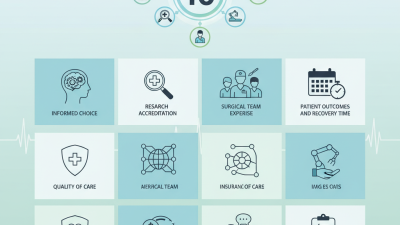
A practical assessment should include operating-room nurses, surgeons, biomedical engineers, and supply managers. Review grip, visibility, tissue protection, compatibility, and emergency availability. Consider whether the device works during power interruptions or limited instrument inventories. Training requirements deserve attention too. A simple system may support safer adoption, but simplicity can hide compromises. For example, poor access control or weak sealing may increase operative difficulty. Trial evaluations should record setup time, handling errors, cleaning problems, and staff feedback. One early assumption may prove wrong.
Tips: Map the most common procedures first. Compare total use costs, not purchase prices alone. Pilot devices with different body sizes and surgical techniques. Keep alternatives available when supply chains fail. Ask nurses what surgeons overlook. Document every adjustment. Perfect selection is unlikely, but transparent review improves reliability.
Score Safety with ISO 14971: Injury, Leakage, Infection, and Visibility
How to Choose Surgical Access Devices for Global Hospitals?
Surgical access devices should be selected through a documented ISO 14971 risk-management process. The device must support stable access without creating avoidable injury. Assess sharp edges, insertion force, tissue pressure, and accidental displacement. A small design weakness can become serious during a long procedure.
Leakage deserves close attention. Check seals, connectors, and closure points under realistic pressure. Fluid leakage may contaminate the field and interrupt the operation. Infection risk also depends on cleaning, packaging, sterilization compatibility, and single-use instructions. These details vary across hospitals, so local workflows matter. Visibility is equally important. Clear markings, suitable illumination, and unobstructed viewing can reduce misplaced instruments and repeated adjustments. In practice, visibility often seems secondary until the field becomes crowded.
Tips:
Build a risk table for injury, leakage, infection, and visibility. Test devices with clinicians in simulated procedures. Record near misses, not only confirmed harm. Compare performance after transport, storage, and repeated handling. Ask whether staff can identify the device quickly under poor lighting. Avoid relying on supplier claims alone; review evidence, instructions, and post-market feedback. Some assessments will remain uncertain. That is acceptable when uncertainty is recorded, monitored, and reduced with new clinical evidence.
Verify Compliance: ISO 13485, FDA 510(k), and EU MDR Requirements
Choosing surgical access devices for global hospitals begins with compliance, not appearance or price. ISO 13485 certification shows that a manufacturer operates a quality management system. It does not prove every trocar, access port, or introducer is clinically suitable. FDA 510(k) clearance demonstrates substantial equivalence to a legally marketed device. It is not the same as broad clinical approval. The FDA CDRH FY2023 Annual Report recorded more than 3,000 510(k) decisions, showing how active this pathway remains. Under the EU MDR, hospitals should check CE status, the notified body, clinical evaluation, post-market surveillance, and risk-management records.
Documentation must match the exact product and intended use. Verify sterilization validation, biocompatibility evidence, shelf life, packaging integrity, and instructions for use. Check whether local languages and registration requirements are covered. The WHO Global Patient Safety Report 2024 estimates that one in ten patients experiences harm during healthcare, with more than half considered preventable. A certificate can look reassuring. It may still hide weak traceability or unclear training requirements.
Tips: Request current ISO 13485 certificates, 510(k) numbers, EU MDR declarations, and supporting technical summaries. Confirm expiry dates directly. Ask for complaint trends and recall procedures. Do not accept a generic certificate. A useful review includes simulated handling with gloves, drapes, and suction. Procurement teams sometimes overtrust paperwork and under-test workflow. That deserves a second look.
How to Choose Surgical Access Devices for Global Hospitals?
Key compliance milestones to verify before procurement
How to interpret the chart: The bars show the year associated with major regulatory milestones relevant to medical-device quality and market access. ISO 13485:2016 was published in 2016, the EU Medical Device Regulation became applicable on 26 May 2021, and the FDA Quality Management System Regulation became effective on 2 February 2026.
For a surgical access device, confirm an appropriate ISO 13485 quality-management system, determine whether FDA 510(k) premarket notification is required and verify substantial-equivalence evidence where applicable, and check EU MDR classification, technical documentation, clinical evidence, UDI, post-market surveillance, and conformity-assessment requirements.
Plan Procurement Around the Lancet’s 5B-Person Surgical Access Gap
How to Choose Surgical Access Devices for Global Hospitals?
The Lancet Commission estimated that five billion people lack access to safe, affordable surgical and anesthesia care. This gap should shape procurement decisions, not merely hospital expansion plans. A surgical access device must fit the procedure, operating environment, and available skills. In a rural hospital, simple retractors may outperform complex systems requiring specialist maintenance. In a high-volume center, reliable trocars or wound protectors can reduce delays and contamination risks.
Start with clinical demand data. Review emergency cases, cesarean deliveries, trauma volumes, and common abdominal procedures. Then assess sterilization capacity, electricity stability, storage conditions, and replacement lead times. Ask surgeons and nurses to test representative devices under realistic conditions. Their experience often reveals handling problems that specifications miss. Small details matter.
A procurement team should compare total cost, not only purchase price. Include training, repairs, consumables, sterilization, and disposal requirements. Local regulations and infection-control standards must guide every choice. Evidence from peer-reviewed research can support safety claims, but evidence may not reflect every hospital setting. That limitation deserves attention. I would not pretend a single device solves a five-billion-person access gap. Procurement can still reduce avoidable barriers when choices remain practical, teachable, and dependable. Sometimes, the best decision is less sophisticated. It may be the device staff can use correctly at 2 a.m. and replace without waiting months.